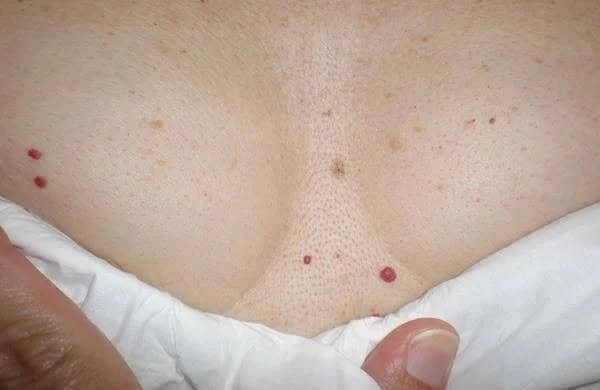
Have you ever noticed a tiny, bright-red dot on your chest, arms, or stomach that seemingly appeared out of nowhere?
At first, it might look like a small blood spot, an unusual mole, or something that makes you wonder whether you should be concerned.
These mysterious little marks are surprisingly common, especially as we grow older. And while most are completely harmless, there are a few important things worth knowing.
They’re often called cherry angiomas, and understanding why they appear could save you unnecessary worry while helping you recognize when a skin change deserves medical attention.
Cherry angiomas are small, noncancerous growths made up of tiny blood vessels. They typically measure just a few millimeters and can appear bright red, purple, or slightly darker depending on your skin tone.
They commonly develop on the chest, stomach, back, and arms. Some remain completely flat, while others become slightly raised, resembling miniature red beads resting on the skin.
But why do they suddenly appear?
The exact cause remains unknown, although researchers have identified several contributing factors. Aging is one of the strongest associations, with cherry angiomas becoming increasingly common after age 30.
Genetics may also play a role. If your parents have several of these little red marks, you might develop them too. Hormonal changes, including those occurring during pregnancy, have also been associated with their appearance.
One important misconception deserves clarification: cherry angiomas are not proof that your body contains excess toxins, and there’s no established evidence that detox drinks or special diets can remove them.
In most cases, these spots cause no discomfort whatsoever. They aren’t contagious, and a confirmed cherry angioma does not turn into skin cancer.
However, not every red spot is a cherry angioma. Other skin conditions can look surprisingly similar, which makes recognizing unusual changes particularly important.
If a mark begins growing rapidly, changes appearance, bleeds without an obvious injury, or looks noticeably different from surrounding spots, arrange an examination with a dermatologist.
The sudden appearance of numerous new red growths, particularly alongside other unexplained symptoms, also deserves medical evaluation.
For ordinary cherry angiomas, treatment is usually unnecessary. However, people who find them cosmetically bothersome can discuss professional removal options, including laser treatment, freezing, or electrosurgery.
Avoid attempting to cut, burn, or squeeze them at home. Because these growths contain blood vessels, improper removal can cause bleeding, infection, or scarring.
Although maintaining healthy skin through sun protection, gentle cleansing, and balanced nutrition is beneficial, no proven lifestyle routine guarantees that cherry angiomas won’t develop.
So, the next time you discover a tiny red dot while looking in the mirror, don’t immediately assume something is wrong.
It may simply be one of the many harmless changes that naturally occur as our bodies age. The important thing is knowing what’s normal for your skin and getting anything unusual checked rather than guessing.